Read Time: 8 min
Last Update: 23 March 2026
Public EV charging stations in Australia must comply with AS 3000:2018 and NCC 2025 standards to ensure safety and grid stability. Installation requires dedicated circuits, specialised RCD protection, and specific mounting heights to meet mandatory accessibility and safety regulations.
-
Dedicated Circuits: Each charger must have a separate sub-circuit with no other connected loads.
-
RCD Protection: Type B RCDs are required unless the unit has integrated 6mA DC fault detection.
-
Mounting Height: Sockets and displays must be positioned between 800mm and 1200mm for DDA compliance.
-
Load Management: Commercial sites must support active device management to throttle power during peak demand.
-
Impact Protection: IK10-rated bollards are required to protect electric vehicle supply equipment from vehicle strikes.
Want to know more about installation pricing?
Fast, licensed installs with upfront, no-surprise pricing.
What Are the Electrical Requirements for Public EV Charging Stations?
Public EV charging in 2026 has moved way beyond just 'plug and play'. With the latest NCC 2025 and AS 3000 standards now in full swing, these stations are treated as serious infrastructure, not just a fancy power point.
EV charging stations demand massive power loads and specialised safety gear that you just don't see in home units, along with strict new accessibility laws. Whether you're a developer or running a local council, getting these technical benchmarks right early is the only way to avoid a costly, non-compliant headache down the road.
Mandatory Compliance Snapshot
Before we break down the install and the technical side of things, there are four non-negotiables every public site has to get right:
⚠️ No Shared Circuits (The 'No Daisy-Chain' Rule)
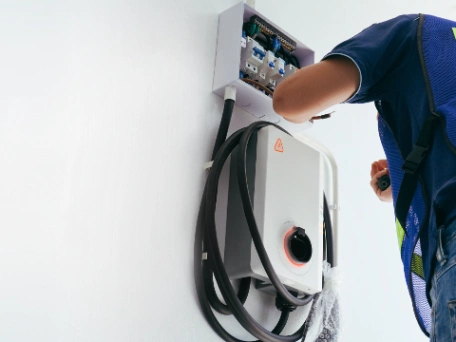
Each charging port needs its own dedicated final sub-circuit. 'Daisy-chaining' multiple units is a hard no: it’s a major fire risk and a direct breach of AS 3000.
✅ Type B RCDs
Standard safety switches just don't cut it here. You need specialised Type B RCDs to protect against DC leakage, which can otherwise 'blind' your building's safety systems and stop them from tripping during a fault.
✅ Smart Load Management
In high-traffic areas, you need active load balancing. This stops the chargers from fighting over power and tripping the main breaker when the building hits peak demand.
✅ Accessibility (AS 2890.6)
This isn't just about the plug. You need specific mounting heights, cable management to prevent trip hazards, and enough clearance for wheelchair users to move around the vehicle safely.
Power Supply & Capacity Assessment
Before you settle on any hardware, you need to check if your building’s electrical 'budget' has enough headroom. By 2026 standards, a bank of public chargers is one of the heaviest loads you can add to a site; it's basically like running several industrial AC units all at the same time.
⚡ The Maximum Demand Check
We look at your site’s peak usage under AS 3000 and weigh it against what the grid is actually giving you. If you’re already running near the limit, adding a 22kW charger is going to be the 'straw that breaks the camel's back', as it'll trip your main breaker the second someone else turns on the AC!
⚡ Load Management vs. Upgrades
If your power supply is looking a bit tight, you don't always have to jump straight to a $50k transformer upgrade. Active Load Management can 'throttle' your chargers during those building power spikes, keeping the site compliant without needing a massive hardware overhaul.
⚡ Phase Requirements
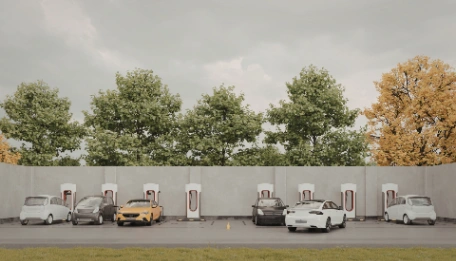
Public 'destination' chargers, the ones in shopping centres or hotels, really need a Three-Phase supply to be useful. If your site is currently running on Single-Phase, you're capped at 7kW, which is just too slow for public turnover. In most cases, upgrading your phases is the first technical hurdle you'll need to clear to give your customers a decent charge in under two hours.
💥Heads up on the NCC 2025💥
If you're on a new commercial build, ‘EV-ready’ is now mandatory. Even if you only install two chargers today, you’ll likely need board space and conduits for 10–20% of your bays. It’s a lot cheaper to run those empty pipes now than to jackhammer the slab in three years when you need to expand.
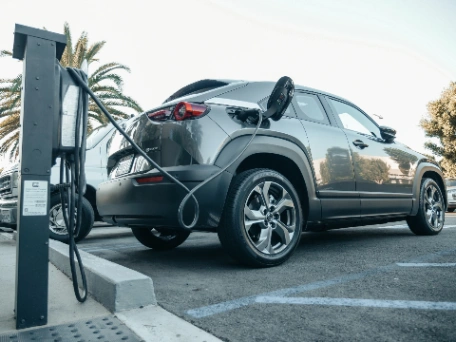
Mandatory Electrical Safety Standards
We have to treat public EV charging as serious industrial infrastructure. Following AS 3000 (Appendix P) isn't just a suggestion; it’s your absolute legal baseline if you want to stay covered by insurance.
🛡️ Dedicated Circuits
"Daisy-chaining" chargers is a hard no. Each port needs its own final sub-circuit and individual protection so a single fault doesn't take down your entire charging array.
🛡️ Type B RCDs (The Non-Negotiable)
Your standard home safety switch (Type A) is a liability here; it can actually be 'blinded' by DC leakage from an EV battery, which stops it from tripping when it matters most. For a public site, you must use a Type B RCD that’s rated to catch both AC and DC faults.
🛡️ PEN Fault Protection
Because of how the Australian grid is set up, a broken neutral wire on the street can actually turn a car’s metal frame into a live conductor. It’s a rare fault, but a nasty one. That’s why compliant chargers have built-in detection; they’ll kill the power the second they sense the earthing is compromised before anyone touches the car.
🛡️ Impact & Weather Protection
Public units take a beating. Make sure your hardware hits an IK10impact rating (for accidental bumps) and at least IP54 for weather resistance if it’s sitting in an open-air car park.
Rapid DC vs Destination AC: Choosing Your Speed
The biggest mistake people make is over-specifying. You don’t always need 'Supercharger' speeds for the sake of it - it really just depends on how long your customers are actually sticking around.
Level 2️⃣: Destination AC (7kW - 22kW)
Destination AC units are the 'slow and steady' workhorses you see at hotels and shopping centres. They're best for sites where people are sticking around for 2 to 4 hours. The real win here is that they’re a fraction of the cost of a Rapid unit and rarely force you into a massive grid upgrade.
A 22kW Three-Phase unit is usually the sweet spot; it’ll top up about 120km of range while your customer is in a movie or having a long lunch.
Level 3️⃣: Rapid DC (50kW - 150kW+)
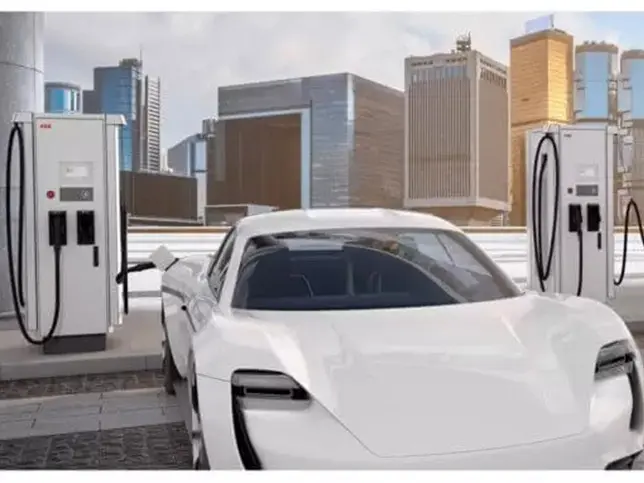
Rapid DC units are the petrol station chargers you see on highways or at quick-turnover hubs. They’re built for that 20 to 45 minute window, but here’s the reality check: they are incredibly power hungry.
A single 50kW unit pulls more juice than 15 or 20 houses combined. Between the hardware and the likely need for a new transformer or HV works, you’re looking at a massive investment. Only pull the trigger on DC if your business model absolutely relies on that high speed turnover.
💥Bottom Line💥: If you install a $60k Rapid DC charger at a hotel where guests stay overnight, you've wasted $55k. The car will be full by midnight and sit idle for the next 8 hours.
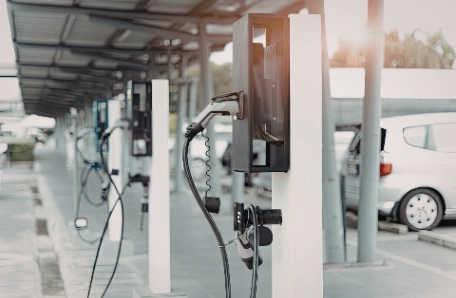
Accessibility & Physical Site Layout
Where you put the charger is as important as the charger itself. With NCC 2025 and updated AS 2890.6 standards now in full effect, a badly placed unit can lead to costly council orders or insurance disputes.
📐 Mounting Height
Keep your mounting height at least 800mm off the deck. Any lower and you’re just asking for a bumper to clip the casing. Plus, you need that height to make sure the unit stays DDA-compliant and reachable for everyone.
📐 Cable Management
Cables left on the ground are a massive trip hazard and a liability nightmare. If your unit doesn't have a retractable cable or a secure holster, you’ll need to install a cable management system to keep the deck clear.
📐 Disabled Parking Bays
Under the 2026 guidelines, you really need at least one bay, or 10% on the bigger builds, to be a Disability Accessible Parking Bay (DAPB). It’s not just about a wider park; you need that 'shared zone' (the hatched area) so a wheelchair user actually has the room to get out and manhandle a heavy charging cable safely.
Data & Communications Requirements
A charger without a solid data connection is just a wall ornament. For any commercial or public site, your comms strategy is what prevents vendor lock-in.
🌐 OCPP 2.0.1 is the Baseline
Think of it as the universal language for ev chargers. It’s what lets you swap out your billing app or software provider down the track without having to rip the actual boxes off the wall. If a vendor is still trying to offload gear that only runs the old 1.6 spec, walk away: it’s already obsolete!
🌐 Ditch the Building Wifi
Between concrete slabs and electrical noise, Wifi is notoriously flaky in car parks. For a reliable site, you need hardwired Ethernet or an industrial 4G/5G SIM inside the unit. If the charger drops offline, you can't process payments.
🌐 Security & ISO 15118
This is the tech behind Plug & Charge. It lets the car and charger talk directly for encrypted billing; no apps or RFID cards required. It's now the standard for government and corporate fleet tenders.
🌐 Active Device Management
Under current grid rules, chargers over 20A often need to be interruptible. This means the grid can slightly throttle speeds during a peak event to prevent a local blackout, usually in exchange for a cheaper tariff.
Electric Vehicle Charging Summary: Australia’s Best Practice for EV Charging & Charger Installation
A real electric vehicle strategy is about more than just ev plugs and cables. Whether it's a basic ev at home setup or a major commercial rollout, your ev charger installation needs to be bulletproof.
We handle the regulations so you don't have to, making sure your RCD protection and installation requirements actually hold up as electricity demand climbs. From fast chargers that drop your energy costs to rapid charging for the high-turnover spots, we supply the electric vehicle supply equipment that ev owners actually like using. Stop guessing and get the fast charging infrastructure your site actually needs.
Call our friendly team at EV Charger Installation on 02 9100 0782 or complete our enquiry form to find out more.
Resources:
Electric Vehicle Council - EVSE Installation Guide
Energex - EV Charging & Connections
DCCEEW - Minimum operating standards for government-supported public ev charging infrastructure
Energy.gov.au - How to Charge Your Electric Vehicle
Department of Transport & Main Roads - Accessible EV Charging