Read Time: 6 min
Last Update: 31 March 2026
To install a commercial EV charging station in 2026, businesses must first assess their building’s electrical capacity and switchboard limits. Key considerations include choosing between AC and DC charging speeds, ensuring site accessibility and safety compliance (AS/NZS 3000), and installing smart software for load management and billing.
Want to know more about installation pricing?
Fast, licensed installs with upfront, no-surprise pricing.
Installing a commercial EV charging station is about more than just bolting a box to a wall. A good setup is one that balances your building’s power limits with what your drivers actually need.
From small office car parks to busy retail hubs, the goal is always the same: a system that’s safe, easy to use, and won’t need to be ripped out and replaced in two years. This guide covers the technical and practical steps to make sure your workplace EV setup is done right the first time.
Checking Your Building’s Power Capacity for Commercial EV Charging
Before you even look at chargers, you need to know if your building can actually handle the extra weight on the grid. We call this your 'peak load'; basically the absolute limit of electricity your property can pull at any one time before things start tripping.
📋 The Site Audit: Key Considerations for Your Property
When we do a site audit, an electrician checks your main switchboard to see if you have any spare 'headroom.' If your air con, lifts, and machinery are already running at 90% capacity, adding ten high-speed chargers is going to trip the main breaker the moment they all kick in.
⚡ Smart Load Management for Commercial EV Chargers
The good news is that in 2026, you don't always need a massive, expensive power upgrade. We can use Smart Load Management; software that 'throttles' the chargers during busy times like midday, then automatically speeds them up as the building’s energy use drops off in the evening.
🗓️ Planning for 2030: The Future of Your Electric Vehicle Fleet
If you’re already digging a trench for one charger, lay enough conduit (the protective piping) for five. It costs next to nothing while the ground is already open, but it’ll save you a fortune compared to digging up the car park again in three years when you need to expand.
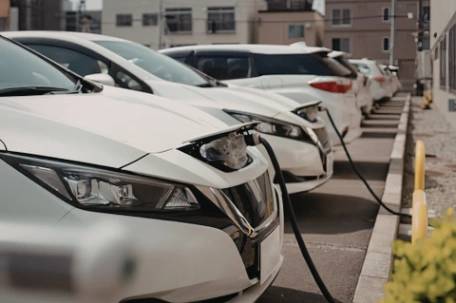
Choosing the Right Charging Speed: AC Chargers or DC Chargers?
Not every business needs a lightning-fast charger. Picking the wrong one is the easiest way to blow your budget.
🏎️💨 AC Charging (Fast)
Often called Level 2, these are the bread and butter for workplaces, hotels, and apartments. If a car is parked for 4 to 8 hours while someone’s at their desk or asleep, a standard AC charger is all you need. They’re much cheaper to install and don't put nearly as much strain on your building’s power grid.
🚀 DC Fast Charging (Rapid)
These are your Level 3, petrol station style chargers. They’re essential for highway stops or delivery fleets that need to get back on the road in 20 minutes. Just keep in mind they cost a lot more upfront and almost always require a serious power upgrade from the street.
👍 The Rule of Thumb: If they stay, go AC. If they’re just passing through, go DC.
Location & Accessibility for EV Charger Installation
Picking the right patch of bitumen isn’t just about convenience; it’s actually the biggest factor in your total install cost.
↔️ The ‘Short Run’ Rule
Try to keep your chargers as close to the main switchboard as you can. Heavy-duty copper cable is pricey, and once you start adding meters of trenching, the bill adds up fast.
🚧 The ‘Ute Test’
In an Australian car park, it’s not if someone will reverse into your charger, but when. A $200 steel bollard is much cheaper to replace than a $3,000 smart charger.
To pass the Ute Test we also recommend mounting chargers at least 800mm to 1200mm high. It keeps them out of the 'splash zone' for rain and mud, and well above the average bumper bar.
💃 Space to Move
Don't tuck chargers into a tight, dark corner. You need enough 'swing room' so people can actually get in and out easily, and you’ll want at least one wider bay to make sure you're hitting the latest accessibility rules for disabled access.
💡 Lighting & Safety
If your staff are leaving late on a winter's evening, they shouldn't be fumbling around in the dark. A well-lit bay isn't just about safety; it also stops people from tripping over cables or accidentally damaging the gear because they can't see what they're doing.
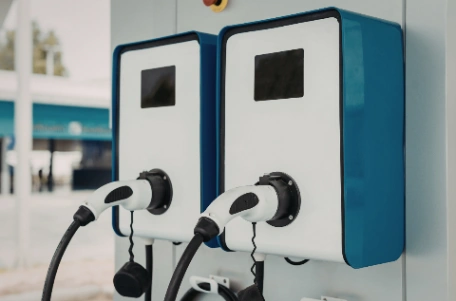
Smart Charging & Software: Driving Revenue & Sustainability
Using a basic 'dumb' charger is honestly a waste of money. Without smart software to manage the load, you're just bleeding power and missing out on potential savings.
🌐 Connectivity
Your chargers really need a solid Wifi or 4G connection. If they drop off, you lose the ability to talk to the grid or handle payments—plus, you'll miss out on those critical security updates.
💳 User Access & Billing
Next, you've got to figure out user access and billing. Will it be free for staff with an RFID card, or are you looking at a 'tap and pay' setup for the public via an app or QR code?
💲 Cost Recovery: Generating Revenue from Your Investment
Smart software lets you track every kilowatt/hour so you can set different rates for staff versus visitors. This way, the business isn't just stuck footing a massive power bill at the end of the month.
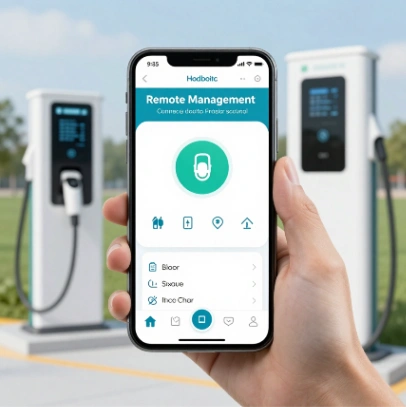
📱 Remote Management: Real-Time Control
If a charger glitches at 2:00am, the last thing you want is to pay for an electrician. A smart system lets you just reset the unit or push a fix right from your phone.
⛈️ Safety & Weatherproofing
Charging outdoors isn't just about a plug, it’s about protection. You'll want a unit that's actually rated for the elements and has built-in ground fault protection. It’s a lot cheaper to invest in a rugged, weather-sealed setup now than to deal with a short circuit down the road.
📈 Future-Proofing (Scalability)
Don't just think about the two EVs you have today; think about the ten you'll have in three years. You need a modular system that lets you daisy-chain new units without ripping up your parking lot or overloading your main breaker. It's much cheaper to build for growth now than to dig new trenches later.
⚖️ Legal & Compliance Check
Don't let a paperwork oversight sideline your project. Under the latest NCC and NSW planning rules, most new commercial builds (Class 5–9) have to be 'EV-ready' from day one, meaning you'll need dedicated boards and capacity for at least 10–20% of your spaces.
Just make sure your hardware hits the AS 3000 standards and keeps the fire brigade happy; otherwise, you're looking at insurance headaches and potential fines.
🏁 Summary: Your Roadmap to Successful EV Charger Installation
Look, building out your ev infrastructure is about more than just the environment—it's a long-term commitment to sustainability that your customers now expect. As ev adoption hits the mainstream, providing reliability for ev drivers is a total competitive necessity. But it all starts with the right charger for the types of vehicles you're actually seeing on-site.
To discuss your EV charging needs, call our team of qualified electricians on 02 9100 0782 or complete our enqiory form today!
Resources:
Solar Choice - Commercial EV Charging for Businesses | Ultimate Guide
CBRE - EV Charging in Commercial Property: Crucial Considerations for Landlords & Tenants
NSW Gov - Making your commercial building EV ready
Electric Vehicle Council - EVSE Installation Guideline
Energex - EV charging & connections
Sprintlaw - How To Start an EV Charging Station Business: Key Steps