Read Time: 6 min
Last Update: 28 May 2026
To install a Level 2 home EV charger in Australia, you need a dedicated 32A circuit. Key requirements include 6mm² copper cabling to prevent overheating and a Maximum Demand calculation to protect your switchboard. Modern smart chargers with built-in 6mA DC protection are recommended to avoid the high cost of external Type B RCDs. All work must be performed by a licensed electrician and issued with a Certificate of Electrical Safety.
Want to know more about installation pricing?
Fast, licensed installs with upfront, no-surprise pricing.
Do I Need a Dedicated Circuit for an EV Charger?
If you’re upgrading to a Level 2 charger, the answer is yes. You’ll need a dedicated circuit. While you might 'scrape by' using a portable electric vehicle supply equipment (EVSE) cable in a normal power point for a bit, it’s a massive gamble.
Most Aussie house wiring just isn’t designed to run at full tilt for hours on end without something eventually melting or catching fire. For safety and performance, dedicated ev chargers are the only way to go.
One Plug, One Job
An electric car pulls more juice than almost anything else in your house. It’s a heavy, constant load that sits there drawing power all night; totally different from a kettle that’s only on for a few minutes.
If you try to share that circuit with a garage fridge or your tools, you won't just be resetting the safety switch every morning; you’re asking for an electrical fire. If you want a fast charger without the safety risks, a dedicated line is really the only way to go.
Here’s what you need to know about your switchboard to get your home EV-ready.
Level 1 vs. Level 2 Charging Requirements
In Australia, the ‘level’ refers to how much power you’re pushing into the battery and how you’re connecting to the grid.
Level 1️⃣: The Emergency Trickle
This is just plugging your car into a standard 10A home power point using the portable cable that came with the car.
🚀 The Speed: Painfully slow charging times. You’re looking at adding maybe 10–12km of range per hour.
🪝 The Catch: It’s fine for a top-up at a mate’s place, but it puts a massive strain on old sockets if you use it every night. Most people find it’s just not enough to keep up with daily driving.
Level 2️⃣: The Proper Way to Charge
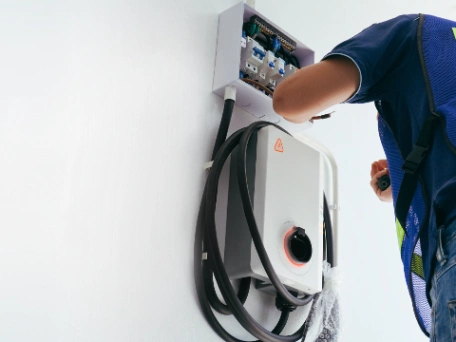
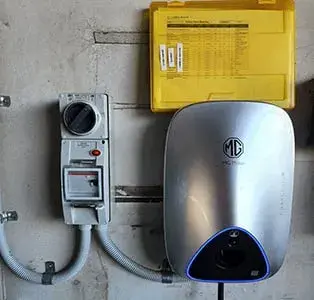
This involves a dedicated wallbox (like a Tesla Wall Connector or a Zappi) installed by a sparky.
🚀 The Speed: Much faster. Depending on your car and your house, you’ll add anywhere from 40km to over 100km of range per hour.
🪝 The Catch: It needs its own dedicated circuit. You can't just plug a Level 2 charger into a standard outlet; it needs to be hardwired directly back to your switchboard with heavy-duty cabling.
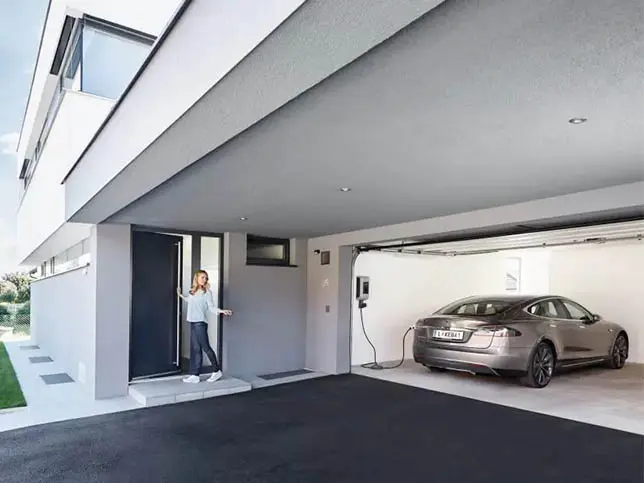
Why a Dedicated Circuit Matters: Continuous Load
Most appliances only pull power for a few minutes at a time. An EV charger is different; it’s a huge, steady pull that sits there for 8 to 10 hours straight.
Standard house wiring isn't built to run that hot without a break. If you're sharing that line, you're literally waiting for a socket to melt or a fire to start behind the wall!
⚖️ The Legal Bit
Under Australian Standards wiring rules (AS 3000), a dedicated circuit isn't just a good idea; it’s mandatory. Your home EV charger needs its own ‘private lane’ back to the switchboard to ensure it runs at full tilt without risking the rest of your home.
Amperage & Wire Gauge Needs
Think of wire gauge like the size of a water pipe. You can't force a 32-amp current through the thin 2.5mm² wiring used for your lights or standard power points; it’s not built for that volume. It’ll get hot, stay hot, and eventually melt the insulation right off the copper.
⚡ The 6mm² Rule
Most qualified electricians use 6mm² cabling for EV installs. It’s thick enough to handle a constant 32-amp draw all night without breaking a sweat.
⚡ Phase Power
If you have three phase power, you can install a three phase charger for rapid charging speeds up to 22kW. However, most homes use single phase charging (7kW), which is still plenty for an overnight top-up.
⚡ Voltage Drop
If your garage is a long way from the switchboard, you might even need 10mm² wire to make sure the power doesn't 'fizzle out' before it reaches the car.
👉 The Bottom Line
If a contractor suggests using standard house wire to save a few bucks, get a second opinion. You need heavy-duty copper to move this much juice safely; otherwise, you’re just paying for a Level 2 charger but getting Level 1 speeds (and a major fire risk).
The Switchboard: Your Home’s Power Budget
Think of your switchboard like a bank account. Everything you turn on, the air con, the oven, and the pool pump, is a 'withdrawal'. An EV charger is a massive, non-negotiable chunk of that balance.
Before installing a dedicated circuit, your sparky must perform an electrical load calculation (Maximum Demand). We have to ensure that if you’re charging the car, cooking dinner, and running the heater at the same time, you won’t trip the main switch and leave the whole house in the dark.
What If You’re Near the Limit?
If your board is maxed out, smart chargers are the answer. We install a sensor that 'throttles' the car if the house starts pulling too much power, protecting your electrical equipment from overload.
👉 The Bottom Line
Getting the load calculation right is the difference between seamless charging and a house that goes dark every time you plug in the car.
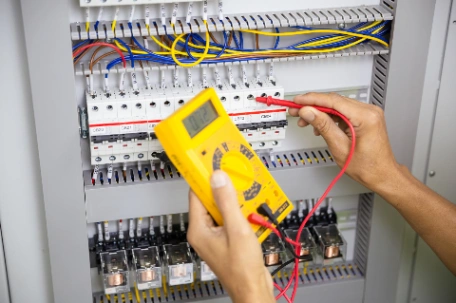
Residual Current Devices (RCD) & Safety Switches
Every Aussie EV charger needs an RCD (safety switch). For EVs, the big issue is DC leakage, which is a fault where the car's battery leaks power back into your home’s wiring.
The Blinding Problem
Standard Type A safety switches (the ones in most Aussie homes) can be ‘blinded’ by this leakage.
If even 6mA of DC leaks back, it can freeze the switch so it won't trip, risking electric shocks elsewhere in the house.💥
Your Two Options:
The Built-in Fix
Many modern chargers have DC protection built-in. This is the smart way to go because it lets your licensed electrician use a standard, cheaper Type A RCBO at the board.
The Type B RCD
If your charger doesn’t have that internal protection, you’re stuck installing a Type B RCD. These are high-tech, bulky, and can easily add $400–$600 to your installation costs.
👉 The Bottom Line
Check the specs for 6mA DC leakage protection. If it’s not built into the charger, you'll be paying for it at the switchboard.
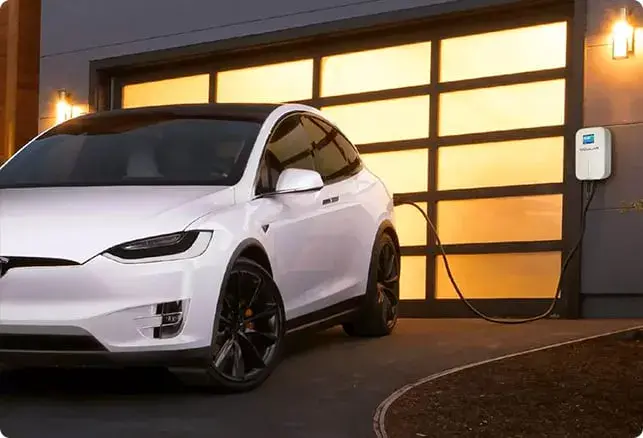
Hardwired vs. Plug-in Installations
In Australia, Level 2 wallboxes are almost always hardwired, meaning the cable goes directly from your switchboard into the charger. You might see plug-in versions, but they’re a different beast.
🔌 Hardwired (The Standard)
It’s best to treat your charger like a split-system air conditioner. It’s a permanent, rock-solid connection. Without a plug to wiggle loose or corrode, it’s the only safe way to pull high power for 10 hours straight, and it’s the only way to hit those full 22kW speeds.
🔌 Plug-in (The Compromise)
These use a heavy-duty industrial outlet (like the big round ones in workshops). They’re great for renters because you can take the charger with you, but every plug and unplug wears down the contacts. Over time, a loose fit creates heat, and heat is the enemy of EV charging.
👉 The Bottom Line
If you own the house, hardwire it. It’s cleaner, faster, and eliminates the risk of a melting socket.
Ready to Install an EV Charger?
Don’t risk a DIY disaster or a budget install that melts your wiring. Make sure your home is 2026-ready with a professional, compliant setup that includes:
✅ 6mm² heavy-duty cabling for maximum safety.
✅ Smart load management to protect your switchboard.
✅ Built-in DC protection to save you hundreds on RCDs.
For more information or to get a professional installation, call our friendly EV Charger Installation team on 02 9100 0782 or complete our enquiry form.
Published by: 12 May 2026