Read Time: 8 min
Last Update: 28 May 2026
Australia’s EV network runs on two standard connectors: the Type 2 plug for Level 2 AC charging (homes, workplaces, and strata) and the CCS2 connector for Level 3 DC fast charging. While older Japanese imports use CHAdeMO and US vehicles rely on CCS1, local commercial infrastructure is built around the Type 2/CCS2 framework to guarantee vehicle compatibility and meet strict Australian compliance codes.
Want to know more about installation pricing?
Fast, licensed installs with upfront, no-surprise pricing.
Plugging in an electric car should be as simple as a petrol nozzle, but we aren't there yet. While Australia has finally settled on a standard infrastructure, using the wrong EV plug is the quickest way to end up with a useless cable or a painfully slow top-up.
This isn't just about knowing your Type 2 from your CCS2. Whether you’re managing commercial spaces or multi-deck apartments, you must match the right connector to the site's power supply.
Getting the most efficient charging means knowing which of the main types of infrastructure fits your layout before sorting out individual home charging specs for various EV drivers.
This guide cuts the fluff and explains the 2026 standards you actually need to know.
Overview of All Connector Types

Level 2 (AC) Charging: The Australian Standard
Whether you're plugging in an electric car at home, at work, or in a strata building, you’re using Level 2 AC power.
Australia has officially standardised the Type 2 (Mennekes) as our standard AC plug type. All new EV cars sold locally use this exact port, which keeps EV connector types highly consistent across the country for standard workplace and overnight charging.
Tethered vs. Untethered Stations
When sorting out your charging station setup, you’ve got two choices for your cables and plugs:
- Tethered (Cable Attached)
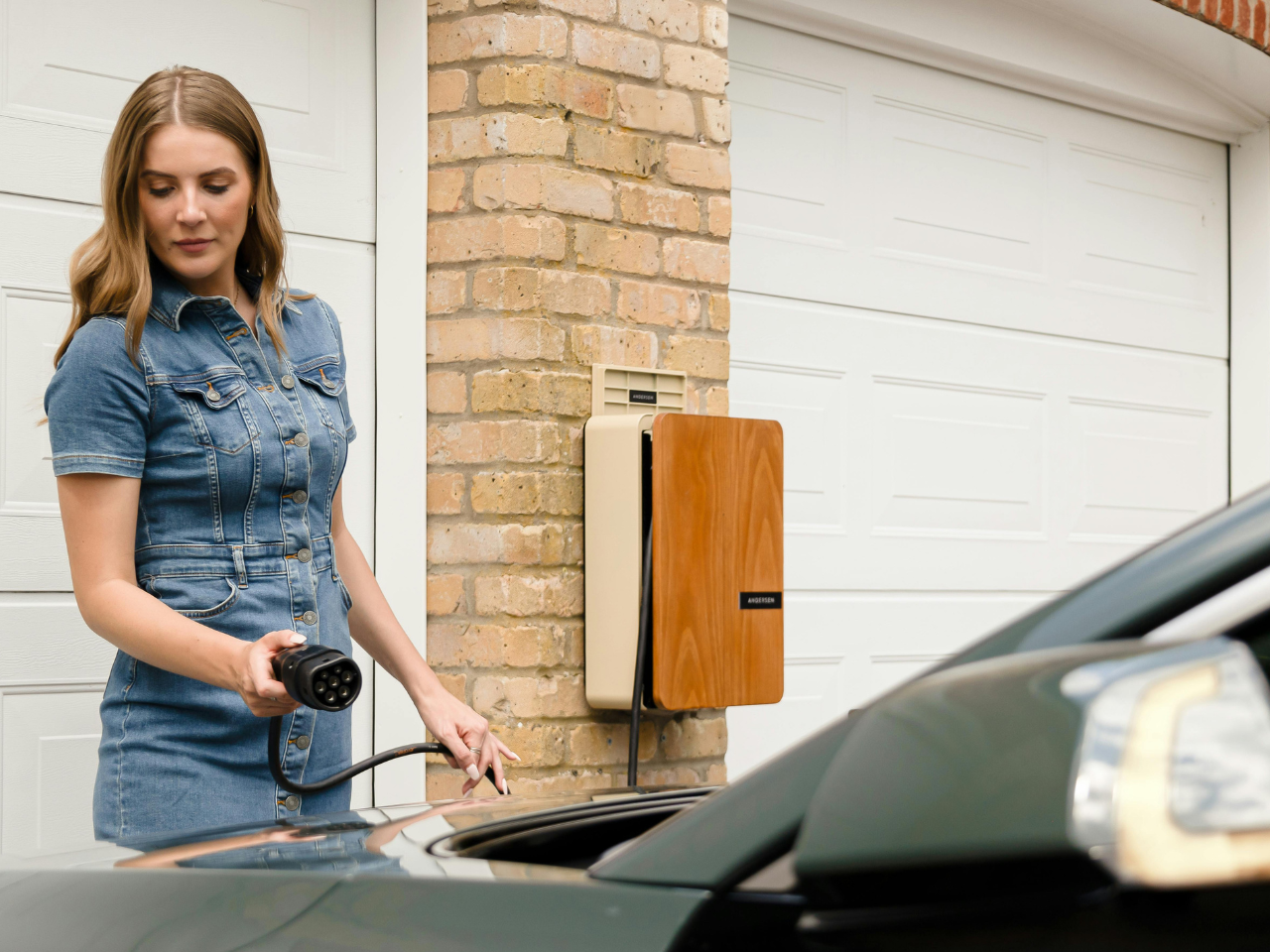
The Type 2 cable is permanently wired into the unit. It’s perfect when you charge an EV at home or in private garages; you just pull up and plug in without messing around in your boot.
- Untethered (Universal Socket)
This is just an open standard plug on the wall. Drivers have to bring their own Type 2 to Type 2 cable to connect. This is the default choice for commercial EV chargers and sharedresidential buildings because it stops cable theft, cuts out trip hazards, and lets older legacy cars connect using their own plug adapters.
Power Limits and Vehicle Caps
Type 2 AC connectors are versatile enough to handle standard single-phase power at 7.4kW or crank it up to 22kW on a three-phase system.
💥Here is the catch: most popular EVs can’t even use 22kW of AC power. A standard Tesla Model 3 caps out internally at 11kW, and a BYD Atto 3 won't pull more than 7.4kW. Running an energy assessment before you buy saves you from paying a premium for 22kW stations when your fleet can only swallow half that capacity.

Level 3 (DC) Fast Charging: The Road Trip Connectors
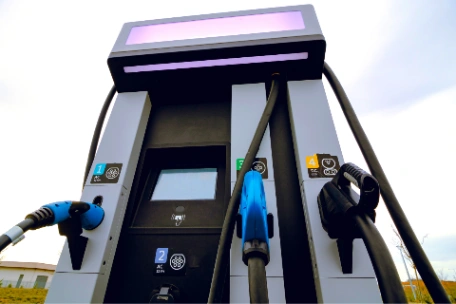
When you hit the highway, you move to Direct Current (DC charging) systems. These high-powered DC chargers bypass the car’s slow onboard charger and dump juice straight into the battery, offering rapid charging that adds hundreds of kilometres of range in under 30 minutes.
CCS2: The Undisputed King
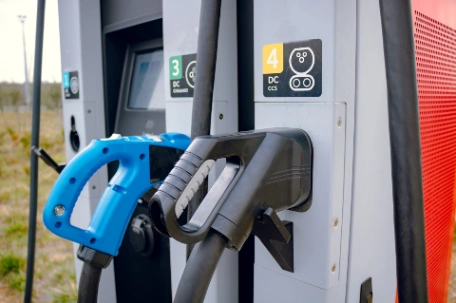
For public fast chargers across Australia, the CCS2 plugs are the undisputed king. The Combined Charging System (CCS connector) simply takes the standard Type 2 AC shape and grafts two heavy-duty DC connectors right onto the bottom.
This means your car only needs one socket to handle both a slow overnight top-up at home and an ultra-rapid burst on the highway. Virtually every new EV hitting local roads relies on these combined EV plug types.
CHAdeMO: The Legacy Outlier
The only other DC plug left on Australian highways is the CHAdeMO connector. Backed by Japanese carmakers, the CHAdeMO plug completely lost the local format war. It maxes out at a sluggish 50kW and is basically a legacy relic now, only found on older Nissan Leafs or Mitsubishi Outlander PHEVs.
If you're building out a new commercial space, do not waste money on standalone CHAdeMO hardware; the market has completely moved on to CCS2.
💥The Commercial Reality: If you are planning a public commercial EV charger setup, do not buy standalone CHAdeMO hardware. The local market has moved on, and even new Japanese models arrive with CCS2 ports. Stick to shared dual-cable units if you must support legacy fleets.
Charging Cable Considerations: What to Look For
If you go with an untethered setup, drivers must supply their own cable to hook into your EV connectors. Don't just grab the cheapest lead online; the wrong cord can physically throttle your charging speeds or leave you struggling to reach the port.
Power Capacity: Avoid the Throttling Trap
Cables look identical on the outside, but their internal wiring dictates the speed limit. If you buy a cheap, single-phase 16A cable, you’ll cap out at a painful 3.6kW.
Plugging that into a premium 22kW commercial stationis a waste of time; the budget cord acts like a kinked hose, choking your charging speeds.
Instead, look for a 32A three-phase Type 2 cable. These are rated for the full 22kW and work perfectly with any vehicle. Even if your current car maxes out internally at 7.4kW or 11kW, a three-phase cable is backwards-compatible and completely future-proofs your setup.
Length: Don't Skimp on the Reach
Standard cables usually drop in at 5 metres. That works fine if your charging port aligns perfectly with the wall box, but it leaves zero margin for error in a shared car park.
Because charging ports can be on the front nose, rear flank, or side guard depending on the EV model, drivers are forced to park at awkward angles.
Upgrading to a 7-metre or 10-metre cable ensures you can actually reach the socket without stretching the cord taut across the pavement and turning it into a literal tripwire.
Weather Upgrades: Choose IP55 or Higher
The Australian sun and rain are brutal on portable gear. Cheap imports usually fail at the moulded handle seams, where the plastic splits and lets water seep right onto the live pins. The moment that happens, your station’s safety switches will detect an insulation fault and kill the power instantly.
Save yourself the headache and buy a cord rated to at least IP55 weatherproofing; it’s the only way it’ll survive being dropped on wet concrete or tossed into a dusty boot.
The Future-Proof Setup: Adaptors & Compatibility
You don’t need to rip out your infrastructure every time a manufacturer updates an EV line. Future-proofing just means installing universal hardware that works with whatever rolls into your car park.
The Universal Base
The easiest way to do that is by installing untethered (socket-only) Type 2 AC stations. Leaving the cable off the wall completely protects you from getting stuck with outdated hardware.
Whether a driver pulls up in a brand-new Euro EV, an older Japanese import, or a commercial delivery van, they just use their own matching cord. Your wall box stays exactly where it is, completely unchanged.
Handling the Outliers
While Type 2 is the absolute standard across Australia, you only need to worry about two exceptions:
- Older Japanese Imports
A few older models (like early Nissan Leafs) use Type 1 ports. Drivers can easily plug into your universal Type 2 socket using a basic Type 2 to Type 1 adaptor cable.
- The US NACS Rumour
Don't let American headlines panic you into delaying a rollout. The shift to Tesla’s NACS plug is strictly a North American phenomenon. Australia is locked into the European standard (Type 2 for AC, CCS2 for DC), and even Tesla ships its cars here with those standard ports.
👉 Stick to standard Type 2 infrastructure and your asset is set for the next decade.
Compliance & Safety Standards
In Australia, cutting corners on shared-space EV charging is a major legal liability. Every installation has to comply with the AS 3000 Wiring Rules and the National Construction Code (NCC). If you fail an inspection, you could face massive fines or completely void your property insurance.
To keep your asset protected, you need to make sure your contractor ticks these three boxes:
Dedicated Circuits & RCDs
Every charging point needs its own final sub-circuit; tapping into existing building lines is a major code violation. This dedicated line must have an EV-specific safety switch (Type A with 6mA DC detection or a full Type B RCD) to stop back-fed DC current from blinding your switchboard.
Physical Space & Protection (AS 2890.1)
An EV bay is not a standard parking spot. Under the updated regulations, EV charging bays must be a minimum of 2.6 metres wide to allow for cable management and door clearance. Also, if your charger is exposed to traffic, you must install structural bollards or wheel stops to protect your investment from a bumper bar collision.
The Sign-Off
The entire installation must be completed by a licensed electrician who submits an official electrical compliance certificate. If you don't have this exact paperwork signed and filed, your commercial property insurance is completely voided the moment a claim is made.

EV Charger Connector Types: A Guide to Australian Plugs
Don't let power limitations or compliance risks stall your rollout. Let’s map out a scalable EV layout that fits your property's existing switchboard capacity.
For more information, or to request a site power and compliance assessment, call our friendly EV Charger Installation team on 02 9100 0782 or complete our enquiry form today.
Resources:
RACV - Guide to electric vehicle charging, plug types & cables
NRMA - Every EV plug type explained
Transport for NSW - Charging an electric vehicle
Energy.gov.au - Electric vehicle charging equipment
RAA - Charge plug types explained
Synergy - Your ultimate EV charging guide: How and when to charge your EV